Why Construction Surveyors Matter
A building can be framed perfectly and still sit in the wrong place. That kind of mistake usually starts small, with a stake set a few inches off or a benchmark nobody checked. A construction surveyor’s job is to catch those small errors before they turn into torn-out footings, failed inspections, and expensive change orders.
They also set and protect reference points, check work as it goes up, and share accurate data with everyone on the job. If you’re a developer, general contractor, or owner managing a project, bringing a surveyor in early is one of the simplest ways to protect your schedule and budget.
Turning Construction Plans Into Accurate Field Locations
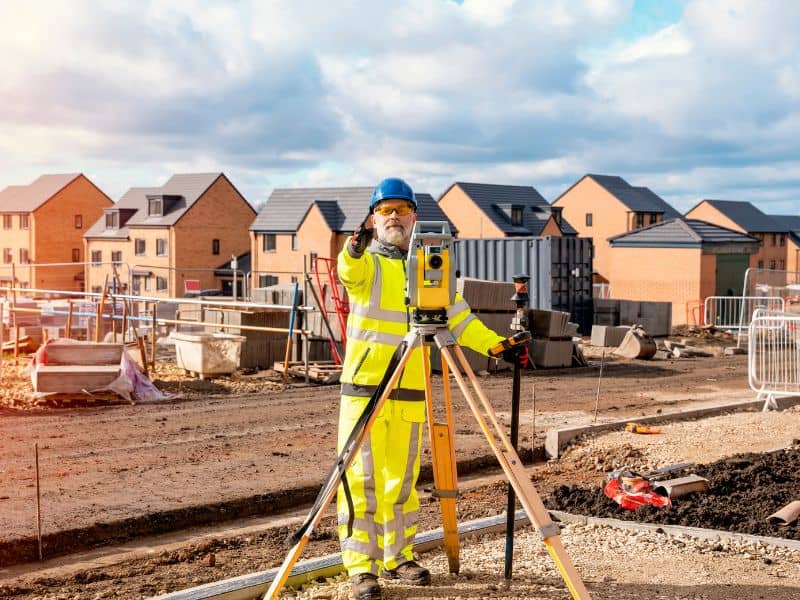
Plans show where things belong, but the ground has no lines on it. A construction surveyor closes that gap through construction staking, also called layout. This means placing stakes, nails, paint marks, or offset points that show crews where to dig, pour, and build.
Typical layout items include:
- Building corners and offset lines
- Curb, gutter, and paving edges
- Storm and sanitary sewer structures
- Utility lines and service points
- Grade stakes showing cut and fill depths
Each mark ties back to coordinates from the engineer’s design. A careful surveyor reviews the plans before heading to the field, and it’s common to find a dimension that doesn’t add up or a grade that conflicts with a pipe. Catching that on paper costs a phone call. Catching it after the concrete truck leaves costs far more.
Ask your surveyor which plan set and revision they’re staking from. Outdated sheets in the field are a frequent source of layout errors. Make sure everyone on site is working from the same current version.
Maintaining Survey Control Throughout the Project
Survey control is the network of fixed reference points that every measurement on the job relies on. It usually includes horizontal control points and benchmarks with known elevations. If control is wrong or disturbed, every stake set from it will be wrong too.
Construction sites are rough on control points. Equipment drives over them, grading buries them, and material piles cover them up. A good construction surveyor places control where it’s likely to survive and sets backup points in case some get lost.
They also recheck control at regular intervals. A point bumped by a skid steer may look fine and still sit a quarter inch off. Comparing it against other points catches the problem before it spreads across the site.
Contractors can help protect control. Flag the points clearly, tell crews to work around them, and report any damage right away. Replacing a disturbed point early is quick, while tracing a bad elevation through weeks of finished work is not.
Checking Building Positions as Construction Progresses
Layout isn’t a one-time task. As work moves forward, the surveyor verifies that what was built matches what was designed. These checks are often called verification or as-built surveys.
Common checkpoints include:
- Footing and foundation forms before concrete is poured
- Anchor bolts and column locations
- Finished floor elevations
- Building setbacks from property lines
- Pipe inverts and structure rims before backfill
Setback checks deserve extra attention. Some local governments ask for a foundation survey before framing inspection to confirm the building meets zoning setbacks. Requirements vary by municipality, county, and project type, so confirm what’s needed with your permitting office before work begins.
Each check is a chance to fix a problem while it’s still small. Shifting a form six inches takes an hour or two. Shifting a poured slab turns into a demolition job.
Coordinating Survey Data Across Project Teams
A construction project has many people working from the same information. Engineers, architects, contractors, utility crews, and inspectors all need to agree on where things are. The construction surveyor often keeps those numbers consistent across the whole team.
That starts with using the same coordinate system and elevation reference on every plan. It also means sharing cut sheets, field reports, and digital files in formats other teams can actually use. Machine-controlled grading equipment, for example, needs a surface model that lines up exactly with the surveyor’s control.
Clear communication matters as much as clean data. When a surveyor spots a conflict, such as a storm pipe crossing a water line at the same elevation, they should alert the engineer and contractor right away. Set up a simple process for staking requests and field reports at the start of the job, since it prevents confusion when deadlines get tight.
Supporting Accurate Work Through Final Construction Stages
The last phase of a project still depends on precise measurements. Final grading, paving, sidewalks, striping, and landscaping all need layout. Drainage is a big concern here, because parking lot grades that are slightly off can send water ponding against curbs or flowing toward buildings.
Near the end, the surveyor usually prepares a final as-built survey. This document shows the actual locations and elevations of buildings, utilities, and drainage features. Owners, engineers, and local agencies often need it for project closeout, stormwater approval, or a certificate of occupancy, though requirements vary by project and jurisdiction.
Keep the as-built with your permanent property records. It becomes a useful reference for future additions, repairs, or a sale. Utility crews and future designers will rely on it long after the job wraps up.
Frequently Asked Questions
What does a construction surveyor do?
A construction surveyor marks design plans on the ground so crews can build in the right place. They set control points, stake building corners, utilities, and grades, and check work as it’s completed. They also prepare as-built surveys that record what was actually built. Their work helps keep a project accurate from first stake to final closeout.
When should I hire a construction surveyor?
The best time is during design, before any site work starts. Early involvement lets the surveyor review plans, set control, and flag conflicts while they’re easy to fix. Waiting until grading begins can lead to delays if the surveyor’s schedule is already full. Confirm your survey needs early, especially when permits or inspections depend on survey data.
Is a construction surveyor different from a boundary surveyor?
Both are licensed land surveyors, but the focus of their work is different. A boundary survey locates property lines and corners. Construction surveying places and checks the improvements being built on that property. Many projects need both, since accurate layout often depends on knowing exactly where the property lines are.
How often does a construction site need survey checks?
It depends on the project size, schedule, and type of work. Most jobs need checks at key stages, such as before pouring foundations and before backfilling utilities. Control points should also be rechecked regularly, especially after heavy grading. Your surveyor and contractor can set a checking schedule that fits the project.
What happens if construction staking is wrong?
Wrong staking can put a building, pipe, or curb in the wrong location or at the wrong height. Small errors may be fixed quickly if they’re caught before concrete or backfill. Larger errors can lead to removal, redesign, failed inspections, or setback violations. Regular verification checks are the best way to catch staking problems early.
