↓
 

Warner Robins Land Surveying

...an Pro17 Engineering site for Warner Robins, GA

Warner Robins Land Surveying
  • Home
  • ALTA Title Survey
  • Boundary Surveying
  • Construction Survey
  • Drone LiDAR mapping
  • Elevation Certificate
  • Land Surveying
  • Topographic Survey
  • Contact Us
Home 1 2 3 4 5 >>

Post navigation

← Older posts

Welcome to Warner Robins Land Surveying

Warner Robins Land Surveying Posted on November 5, 2016 by Land SurveyorApril 2, 2020
Newnan land surveying

Welcome to Warner Robins Land Surveying’s website

This site is intended to provide you with information on a Land Surveying Company in Warner Robins. If you’re looking for a Warner Robins Land Surveyor, you’ve come to the right site. If you’d rather talk to someone about your land surveying needs, please call (478) 449-0555 today. For more information, please continue to read. 

Newnan land surveying

Land Surveyors are professionals who measure and make precise measurements to determine the size and boundaries of a piece of real estate.  While this is a simplistic definition, boundary surveying is one of the most common types of surveying related to home and land owners. If you fall into the following categories, please click on the appropriate link for more information on that subject:

Warner Robins Land Surveying services:

  1. I need to know where my property corners or property lines are. (Boundary Survey)
  2. I have a loan closing or re-finance coming up on my home in a subdivision or I’m purchasing a lot or house in a recorded subdivision. (Lot Survey)
  3. I need a map of my property with contour lines to show elevation differences for my architect or engineer. (Topo Survey)
  4. I’ve just been told I’m in a flood zone or I ‘ve been told I need an elevation certificate in order to obtain flood insurance or prove I don’t need it. (Flood Survey)
  5. I’m purchasing a larger tract of land, acreage, that hasn’t been subdivided in the past. (Boundary Survey)

If your needs don’t fall into one of the above, don’t worry, we’ll get to the bottom of it. CALL Warner Robins  Land Surveying TODAY at (478) 449-0555 OR better yet, fill out a Contact Form request to discuss your survey needs.

Posted in land surveying, land surveyor | Tagged Land Surveying, land surveyor, land surveyor warner robins ga, property line survey, warner robins land surveying, warner robins land surveyor

Why a Topographic Survey Is Essential for Planning Drainage Improvements on Developing Properties

Warner Robins Land Surveying Posted on June 24, 2026 by Land SurveyorJune 22, 2026
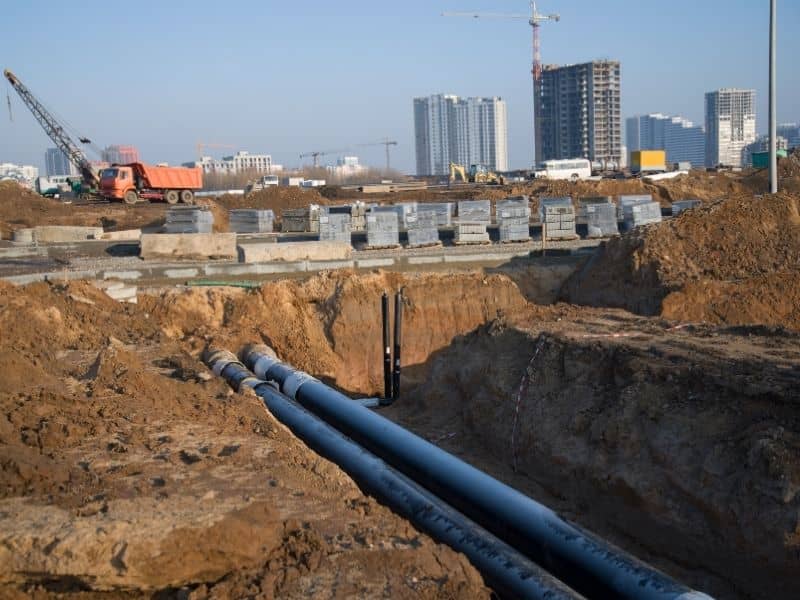
Underground drainage pipes and site grading improvements designed to manage stormwater on a developing property

Water doesn’t care about property lines or building plans. It goes where the ground takes it, and that’s not always where a developer expects. A site that looks ready to build on can have water problems hiding just below the surface, spots where rain collects, paths where runoff cuts across a planned street, low areas that stay wet long after everything else dries out. A topographic survey finds those things before they become expensive problems on an active construction site.

Why Water Rarely Stays Where Developers Expect It To

Looking at a piece of land from the road gives a rough idea of how it sits. But rough ideas aren’t enough when drainage is involved. A gentle slope that looks simple from a distance might shed water in three different directions depending on small changes in elevation that aren’t obvious without measurement. A flat section that seems easy to work with might actually collect water from higher ground nearby and hold it.

A topographic survey records the actual elevation of the land across the whole site. That data shows where water naturally wants to go before anyone starts grading or placing structures. Developers who skip that step often find out mid-project that water is moving in ways they didn’t plan for, and fixing drainage problems after construction has started costs a lot more than understanding the land before it begins.

How High Points and Low Areas Influence Drainage Design More Than Surface Appearance

Flat doesn’t mean simple when it comes to drainage. A site that looks level from where you’re standing might have a six-inch difference in elevation across a hundred feet of ground. That six inches determines where water pools, where it runs off, and where it causes trouble after a heavy rain.

Those small elevation changes are easy to miss without survey data. A crew grading by eye might not catch a subtle low spot that will collect water every time it rains. An engineer designing a drainage system without accurate elevation data might place inlets and pipes based on how the land looks rather than how it actually performs. A topographic survey takes the guesswork out of that. It shows the high points and low areas across the full site so drainage design can be based on real numbers, not visual estimates.

Why Existing Swales, Ditches, and Natural Channels Still Affect Future Development

Most developing properties already have some kind of drainage path on them, even if it doesn’t look like much. A shallow swale running along the edge of the land. A roadside ditch that carries water away from the site. A low channel through the middle of the property that fills up during storms. These features have been moving water for years, sometimes decades, and they don’t stop doing that just because a development project starts nearby.

Working against those existing paths instead of accounting for them is one of the most common drainage mistakes on developing sites. Here’s what can happen when existing drainage features get ignored during planning:

  • Water that used to flow through a natural channel gets blocked and backs up onto the site or neighboring land
  • A swale that gets filled in during grading leaves nowhere for runoff to go during heavy rain
  • Roadside ditches that get disrupted during construction stop functioning the way they were designed to
  • Drainage problems that seem to appear out of nowhere turn out to be existing water paths that were never accounted for

A topographic survey identifies those features before grading starts. Planners can then work with them instead of accidentally cutting off water movement the land has relied on for years.

How a Topographic Survey Helps Coordinate Drainage Across Neighboring Properties

Water that leaves one property has to go somewhere. If a development project changes how runoff moves across a site, that change affects the land next door and sometimes the land beyond that. A drainage system designed only for the subject property without looking at the bigger picture can create problems for neighbors that nobody planned for.

A topographic survey gives planners the elevation data they need to think about drainage in a broader way. It shows how the subject site sits relative to neighboring land, which helps identify where water comes from and where it goes after it leaves. That picture matters when engineers are sizing drainage systems and deciding where improvements need to go. A system designed with that broader view in mind is less likely to shift a water problem from one property to another, and more likely to work the way it should when a big storm hits the whole area at once.

Why Understanding Water Movement Early Can Reduce Future Maintenance Challenges

Drainage systems that get designed without good elevation data tend to need more attention over time. A pipe that was undersized because the site’s flow patterns weren’t fully understood. An inlet placed slightly off from where water actually collects. A swale graded to a slope that doesn’t move water fast enough to keep it clear. These small misses add up into maintenance problems that the property owner deals with for years.

Getting a topographic survey done early in the planning process reduces how often those problems show up. When the drainage design is based on real elevation data, the system fits the land instead of fighting it. Water moves through it the way the engineer intended. The features that need regular maintenance, clearing inlets, checking slopes, managing outfalls, are in the right places to be reached and serviced without extra difficulty. As the property changes over time, whether through new phases of development or changes in use, that original elevation data stays useful as a reference for future improvements. Starting with good information makes every decision that follows a little easier and a lot less expensive.

Frequently Asked Questions

What does a topographic survey show? It records elevation changes and physical features across a property, giving planners a detailed picture of how the land is shaped.

Why are topographic surveys important for drainage planning? They provide the elevation data that engineers and designers need to understand how water naturally moves across a site before drainage systems get planned.

Can a topographic survey identify low spots and drainage paths? Yes. It picks up changes in elevation and existing features that show where water collects and where it flows.

Who typically requests a topographic survey? Developers, engineers, builders, architects, and property owners use them before site improvements begin.

Do topographic surveys only help with current projects? No. The elevation data they produce supports future improvements, maintenance decisions, and long-term planning as a property continues to develop over time.
Posted in topo surveying | Tagged topographic survey

Learn The Basics of Boundary Surveying

Warner Robins Land Surveying Posted on April 4, 2020 by Land SurveyorApril 2, 2020

Investing in land or real property may be the most expensive investment you’ll make in your lifetime. Thus, it is wise to learn a little more about real estate and be aware of the significance of boundary surveying before making such investments.

Boundary Survey Defined

Let’s first define boundary surveying. Boundary surveying is the verification of property lines of a parcel of land as detailed in the description in the deed. It may also show all the structures found on the property including any easements and encroachments, and also the restrictions imposed by local governing authorities.

To avoid unnecessary expenses and free you from frustrations brought by unexpected lawsuits, it is vital to conduct a boundary survey in the Newnan area before purchasing or selling a parcel of land. A survey is also required before subdividing a lot, building structures or improving the property to make sure that you don’t end up having to move a building or resolve a boundary dispute with your neighbors.

Other Uses of a Boundary Survey

A boundary survey may also help you identify whether you are located in a floodplain, which would mean you are required to obtain flood insurance. A boundary survey in Newnan is also very helpful in completing the requirements for a mortgage loan from a lending institution, which includes checking the accuracy of the description of the property in the deed and the presence of improvements, easements, and any encroachments.

land surveyingBoundary Survey Costs

The cost of a Newnan boundary survey depends on several factors, some of which can only be determined once the work has begun. Some factors are size of the lot, the terrain, the vegetation type, the season of the year (which greatly affects the growth of vegetation). The work begins with the deed research that can be started with the deeds or abstracts that the landowner may possess and can extend as much as going to the courthouse and putting together the pieces of the deed. The job could get more complex if the property involved has been passed on through several owners over the years. Some may have sold off a portion of the parcel or may have added to adjacent lots. The more of these additions and subtractions can significantly impact the complexity of the work to be done, which consequently adds to the survey cost.

Boundary Survey Drawing

After the boundary survey is done, a landowner should expect to get a survey drawing that contains a sketch of the survey findings and the legal description of the property. It is also expected that proper markings of the property lines and corners have been placed, which are usually bright-colored ribbons or paint, wooden stakes, or concrete monuments. Others survey projects may or may not include a drawing or report, depending on the services agreed upon.

Posted in land surveying | Tagged boundary, boundary survey warner robins, boundary surveying warner robins, surveying warner robins

What is an ALTA Title Survey?

Warner Robins Land Surveying Posted on February 10, 2020 by Land SurveyorApril 2, 2020
ALTA Title survey

ALTA stands for American Land Title Association. ALTA Land Surveys are similar to a boundary or lot survey of a piece of land. However, an ALTA Title Survey has further requirements for the land surveyor as he executes the survey because of the high-dollar value of the property.

ALTA Survey Standards Lead to Consistency

ALTA SurveyMost states have widely varying standards for surveying. Thus, ALTA Surveys follow a national standard for surveying aimed to generate consistency regardless of the location of the survey. This type land survey is usually done on a multi-family residential or commercial site and when the owner and/or lender are from different states. But more often than not, it is prepared for commercial properties because it provides the information needed in order to insure the title to the land. Commercial developments may also require improvements to a high level that is also obtained through this survey.

ALTA Title Surveys are very complex and are commonly more costly than surveys following state standards because it takes more time and effort.

Costs for such surveys could be up to 50% – 200% more than a similar boundary survey. It is also important to note that the more restrictive standard is followed in the survey if the state standard is more restrictive on a certain aspect than the ALTA standard. An ALTA Title Survey must show all data including boundary lines, main building location and all its improvements, location of ancillary buildings, rights-of-way, and easements or access rights by utility services such as water, telephone, gas, railway and other utilities. A helpful tip in outlining the scope of services of the land surveyor is to thoroughly go over the elements of “Table A – Optional Survey Responsibilities and Specifications”.

ALTA Survey Requires Title Committment

Before an ALTA Title Survey can be completed, there must be a current title commitment. This is where the land surveyor will refer for the legal description of the property and all legal encumbrances or exceptions. The areas of ownership, encumbrances, and improvements will be presented graphically including encroachments, if there is any.

All the affected parties; the buyer, seller, lender, and title insurance company must be indicated on the ALTA Title Survey certificate. The land surveyor and the title insurance company must closely work together in order to illustrate comprehensively all matters affecting the ownership of the land and improvements.

Requirements for an ALTA/ACSM Land Title Survey as detailed by the American Land Title Association, National Society of Professional Surveyors and the American Congress on Surveying and Mapping is certainly met through an ALTA Title Survey.

If we can help you with an ALTA Title Survey in the future, please don’t hesitate to contact us at Warner Robins Land Surveying at (478) 449-0555 or fill out our contact form by clicking the link.

Posted in ALTA Title Survey, land surveying | Tagged ALTA Survey, ALTA Title survey, ALTA title survey Warner Robins GA, Warner Robins ALTA Title Survey

Post navigation

← Older posts
Get Quote Button
© Warner Robins Land Surveying
Warner Robins, GA
Phone:(478) 449-0555

Web Development and SEO by:
N2Biz.co


Privacy Policy | Terms of Use

↑